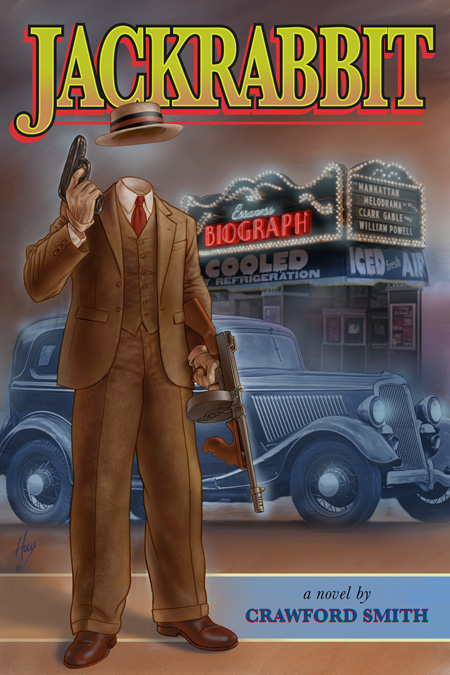
I’ll admit up front that this post is going to suffer from a marked lack of graciousness on the part of yours truly. Anyone who I offend can contact me directly, and I’ll buy you a Mr. Pibb.
This has been a frustrating week for me personally, for a variety of reasons – but instead of barfing them out in one whiny blog post, I figure I can stretch them out to two or three bitch-specific posts that will perhaps in some small way boost the Google search ranking of this site. It’s called providing content, people!
Today’s gripe: getting reviews on Jackrabbit’s Amazon site. From my research into the wild and wooly world of self-publishing, getting a variety of reviews on your book’s Amazon listing is the key to sales. If you look at a book listing, and it has half a dozen five-star reviews, and most of the reviewers have the same last name as the author, then you know you’re probably looking at a real snoozer with horrible punctuation and probably no verbs. No one’s going to want to buy that book.
Here’s where the lack of graciousness comes in: I am fortunate in that I have many friends and relatives who very generously bought Jackrabbit when it came out. To them I offer much gratitude, as well as much frustration – because getting a significant number of them to actually go on Amazon and leave a review has been like pulling teeth!
“Oh, I’ve been meaning to do that,” they say. “But I just really haven’t had the time lately. Maybe next week.” All this spoken in a weary tone, as if I’d cajoled them into cleaning out my basement. It makes me want to holler, “Hey, it’s just a quick review! It will take approximately the same amount of time as it did for you to post to Facebook that picture of the basket of Buffalo wings you got at the Cleveland airport!” I mean, really.
So, I keep wheedling, hinting and make veiled threats about kidnapping beloved pets or stuffed animals. It occurs to me that maybe they haven’t actually read the book. That’s a distinct possibility for the people that downloaded it for free during one of the Amazon eBook giveaways. When something cost nothing, then it’s never a high-priority. On the other hand, maybe they read it, but think it stinks. I hope not, but even so, I rather have a raft of brutally honest reviews rather.
All right, so I just try to stay patient and avoid getting too pushy (but still a little pushy, maybe). What else is there to do?
Fuggit. I’m gonna get myself a basket of Buffalo wings.
I got a nice surprise this morning when I discovered that an essay I had written about the endurance of the John Dillinger mythos was posted as the feature article on CrimeReads.
I was especially flattered as CrimeReads is a well-respected crime book blog; an offshoot of the uber-respected LiteraryHub website. Big love to them for giving me a chance to show off my writing (and, of course, flog Jackrabbit), while other, less-prestigious book review sites gave me the cold shoulder. Take that, “Uncle Bubba’s Best Bad Guy Book and Monster Truck Video Reviews”! You missed out.
Four-plus years’ worth of (occasionally) hard work has finally paid off! This week, I got my first royalty payment for Jackrabbit – a whopping forty-one dollars and forty-eight cents! Woo-hoo! Not complaining, not complaining – well, not really. It’s good to see something in the “credits” column of the Sweet Weasel Words balance sheet. The last time something showed up there was when I signed up for a PayPal account, and they deposited 39 cents – then promptly withdrew it.
So, they way I’m looking at the situation vis-a-vis trying to market and promote the book: I’ve spent nearly five years writing this book and getting it published. Now, in my foolishness, I thought that that was going to be the bulk of the effort. I realize now that it was only the preliminary effort. So the choice is to suck it up and get on with the unpleasant (for me) matter of marketing, or just walk away and start working on another novel.
This is tempting, very tempting. I’ve got at least three big-time story ideas I’d really like to explore. On the other hand, after all the effort I’ve put into Jackrabbit, I’d really like to get it the exposure I think it deserves, and maybe make a few bucks in the process. Of course, I’m under no illusion that this book is a prize-winner, or that I’ll be able to retire on the proceeds. Still, if I want people to be able to read and enjoy it (and I’ll be honest, to stroke my ego in the process), I guess I’ll have to put put off the next big writing project and start selling.
From what I’ve been able to tell, the most effective way to do this is through Facebook advertising. And I really hate the idea of giving money to Face book – hell, I resent just having to have a Facebook account at all. So be it. Needs must when the devil drives, and so forth.
At this point, I’ve got $41.48 that I didn’t have last week, so I might as well hand it over to Mr. Zuckerberg and see if he can’t turn that into at least $42 worth of additional sales. It will be fairly easy to measure the success of this endeavor, given the current sales figures. So what the hell, guess I’ll see what I can make of this.
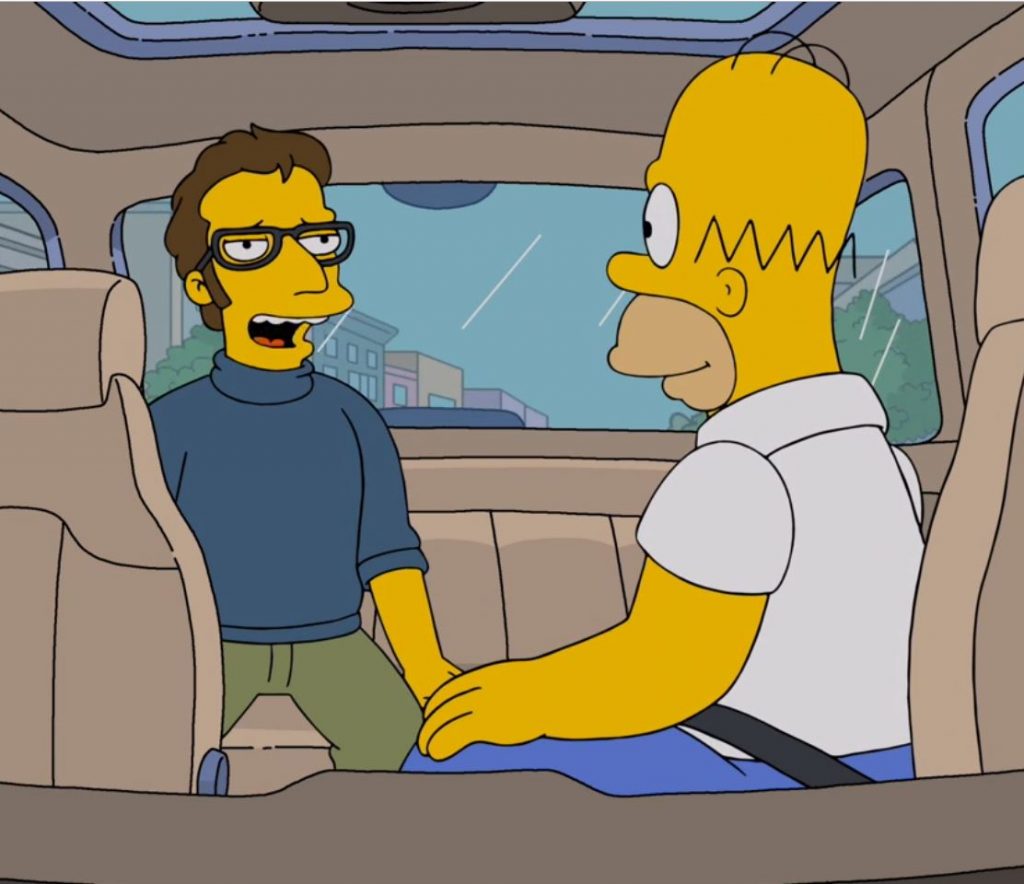
I was reminded recently about how I came to the decision to self-publish Jackrabbit. Basically, I didn’t want to beat my head against the wall trying to go the traditional publishing route. It was summed up pretty well in a recent episode of the Simpsons (S30E05; yeah, I’m a huge Simpsons geek). I the episode, a salesman is trying to sell Homer on the merits of a self-driving car:
Salesman: Yeah, you’re free to do whatever you like, Homer.
Homer: Can I text while it’s driving?
Salesman: You can write a novel while you’re driving.
Homer: Whoa, whoa, whoa, whoa! In today’s publishing environment?
The Simpsons, “Baby You Can’t Drive My Car”
I laughed my ass off at that line, and had to explain to my wife why I thought it was so funny: because today’s publishing environment sucks.
Shortly after the first draft, I made a semi-concerted effort to find an agent to sell the manuscript. I quickly ran up against two obstacles: the query letter, and the literary agents themselves.
The query letter is the letter you send to a prospective agent to get them interested in flogging your book to a publisher. Apparently, they get a ton of these things a day, and you really have to put together something compelling to get them to read past the first sentence or two.
In fact, I found a website run by an agent that does nothing but critique people’s query letters. However, in order to get your query letter considered for a crit on the site, there were a whole buncha hoops you had to jump through first. So, in order to supplicate an agent to get help so you could supplicate another agent, you had to write and re-write. Good practice, but the whole process was too “meta” for me. My interest in this fizzled quickly.
The thing that put the nail in the coffin was when I actually met a couple of literary agents. I’ll tread softly here, since it would be counterproductive to alienate some of the parties involved.
There is a fairly prominent writers group in the area, that hosts an annual conference here in town. The admission price is pretty steep, but if you volunteer to work there, they’ll knock 50% off the price. Being a cheapskate, I went the volunteer route. The only drawback was that I had to work four hours a day as part of the commitment.
It became pretty obvious to me that one of the main focuses of the convention – if not THE main focus – was the paid pitches. For twenty-five bucks, you got eight (8) minutes of face time with an agent to pitch your book or screenplay. There was an extensive catalog of agents, and you could pick ones that repped your genre, etc. This went on all day long throughout the conference. Then every ten minutes, they would usher a herd of would-be authors into the same room they used for the lunches, you would find your agent’s table, and give your pitch.
At that point, I did not have a whole lot of extra cash to throw around, so I was reluctant to spend more money than I already had. Still, it seemed like a good thing to at least try, so I found an agent who seemed like a likely bet (repped crime fiction, specifically), signed up and waited my turn.
In the meantime, there were other sessions where people would help you refine your pitch I went to a couple of these, and came up with what I thought was a pretty good pitch. (It ended up being the basis for the blurb for Jackrabbit, actually.) So I was psyched to go and pitch my book, as any agent who was worth half a damn would immediately recognize my brilliance and the book’s sales potential and sign me on the spot.
So I rolled in and gave my pitch, and the agent responded by saying, “Why should I care about John Dillinger? He was a killer.”
Huh?
I was so blown out by this response, that I really didn’t know what to say. I think we ended up arguing for the rest of the eight minutes, although the details are still hazy. I just remember leaving the session in a stuttering rage.
It was one of those situations where you come up with the perfect response ages after it’s too late to employ it. And the more I thought about it, the angrier I got. My response was, basically: “Yeah, people hate reading about killers and criminals. That’s why the bookstore shelves are crammed with bios of Mother Teresa and Albert Schweizer! Not a single book about Jeffrey Dahmer or John Wayne Gacy to be found!”
I mean, this person was an agent that allegedly repped crime books; she should know good and damn well that murderers sell, big time. This realization made me even angrier – she had gotten me with a “gotcha” question that was completely counterproductive. Fuck that noise! I was paying for her time to the tune of $150/hour. I should not have been treated like I was a student at an MFA crit. If she wasn’t interested in representing that book, she should have at least had the professionalism to say so, and perhaps recommended me to another agent who knew that killers sold books.
Also, Dillinger was never convicted of murder. Accused, yes – but not convicted.
Anyway, that episode pretty much poured piss on the last ember of my desire to pursue a traditional publishing route. Perhaps it was for the best, although I sometimes have to forcibly remind myself of that when I’m going through the promotional paces required get a self-published book in front of readers’ noses. Then again, if it means I don’t have to deal with literary agents, it’s probably worth it.
AS part of the Amazon KDP promotion hoo-ha I agreed to, I can give away free copies of the eBook of Jackrabbit. This will run the last three days in July:
Monday, July 29 – Wednesday, July 31
Just go to the Amazon eBook page and download the eBook por nada any time during these 3 days. Enjoy! (And a good review on Amazon would be appreciated as well…)
Or, actually, ten ISBNs plus a bar code, all for the low, low price of three hundred and twenty bucks.
As a wanna-be author, I had always wanted an ISBN of my own. As a soon-to-be self-published author, I found out just how much of a scam the ISBN system is.
First, ISBN stands for International Books Standard Number. It is meant to be a unique identifier for each published edition of a commercial work. An e-book, a paperback and a hardcover of the same book will each have a different ISBN.
In the U.S., ISBNs are doled out by a company called Bowker. Of course, there is a cost, and as I found out, the pricing follows a very curious economy of scale:
Got that? One ISBN costs $125. However, 1000 ISBNs costs $1500, for a unit price of $1.50. How can such a discount occur? Because they’re just fuckin’ numbers!
Bowker’s got a monopoly on this market and they squeeze ’til we turn purple. It’s a scam, man. Sure, for a big publishing company, shelling out for tens of thousands of ISBNs at a buck or so a pop is chump change. But for struggling self-publishing authors, it feels like we are being taken advantage of. (Yeah, I ended that sentence with a preposition. It’s idiomatic, plus I’m in a pissy mood.)
Of course, there are alternatives, but they kinda suck. First, you can just go without an ISBN, but that severely limits the author’s ability to sell the book. Also, if you’re going to publish through Amazon/KDP, they will kindly provide you with an ISBN free of charge. Of course, Amazon didn’t get to be the behemoth it is by giving stuff away, so you can bet that there are strings attached to their “free” ISBN. Basically, if you accept their generosity, you are pretty much restricted to selling your book through their channels.
So in the end, I ponied up the money for 10 ISBNs plus a barcode (another Bowker scam), even though I really only need two or three ISBNs for Jackrabbit. Guess I’d better keep writing!
Throughout the process of preparing Jackrabbit to go to print, I have been availing myself of an online service called Reedsy. I initially used the service to find someone to edit the manuscript. I ended up engaging the services of an editor named Jennifer Huston of White Dog Editorial Services. She was great to work with, and incredibly thorough. She lives in the Chicago area, and was able to correct some of my geographical errors, as well as many others.
Of course, this kind of quality does cost some coin. Between the editing and the cost of the cover art, I had pretty much blown my production budget for this project. I was concerned about how I was going to typeset the book, as I knew I was going to have to do it myself. I had head any number of sources say that MS Word was a bad choice. Adobe InDesign seems to be an industry standard, but is fairly expensive. I did shell out twenty-five bucks for a discontinued publishing application called Serif Page Plus. It looks pretty good, but I didn’t really want to take the time to master a new software package.
Then I noticed than Reedsy offers a typesetting called Reedsy Book Editor. I was a bit skeptical at first, but what the heck – the price was right ($0). Besides, Reedsy had gotten their vig from my transaction with the editor, so I figured it was the least they could do.
Color me impressed, friends! After a few minor initial hiccups (i.e. user errors), I was able to upload my Word file and the Reedsy Book Editor cranked out a typeset version in about five minutes. Super-duper-cool! Now I have to read through the bastard one more time and make sure there are no proofreading errors. Fun ahoy!
I took the plunge and signed up for my Amazon KDP account in order to start the process of publishing Jackrabbit. Big sigh. I jumped on the Amazon bandwagon back in the early 90’s because I’m a book nerd, and they were a cool online book store. Now they’re a behemoth that prys into way too many aspects of our lives. Yet I swallow my reservations and sign on, since it’s pretty much the only way to go for self-published authors. I hadda give them my damn bank account information! If I had more than eight bucks in it right now, I’d be worried.